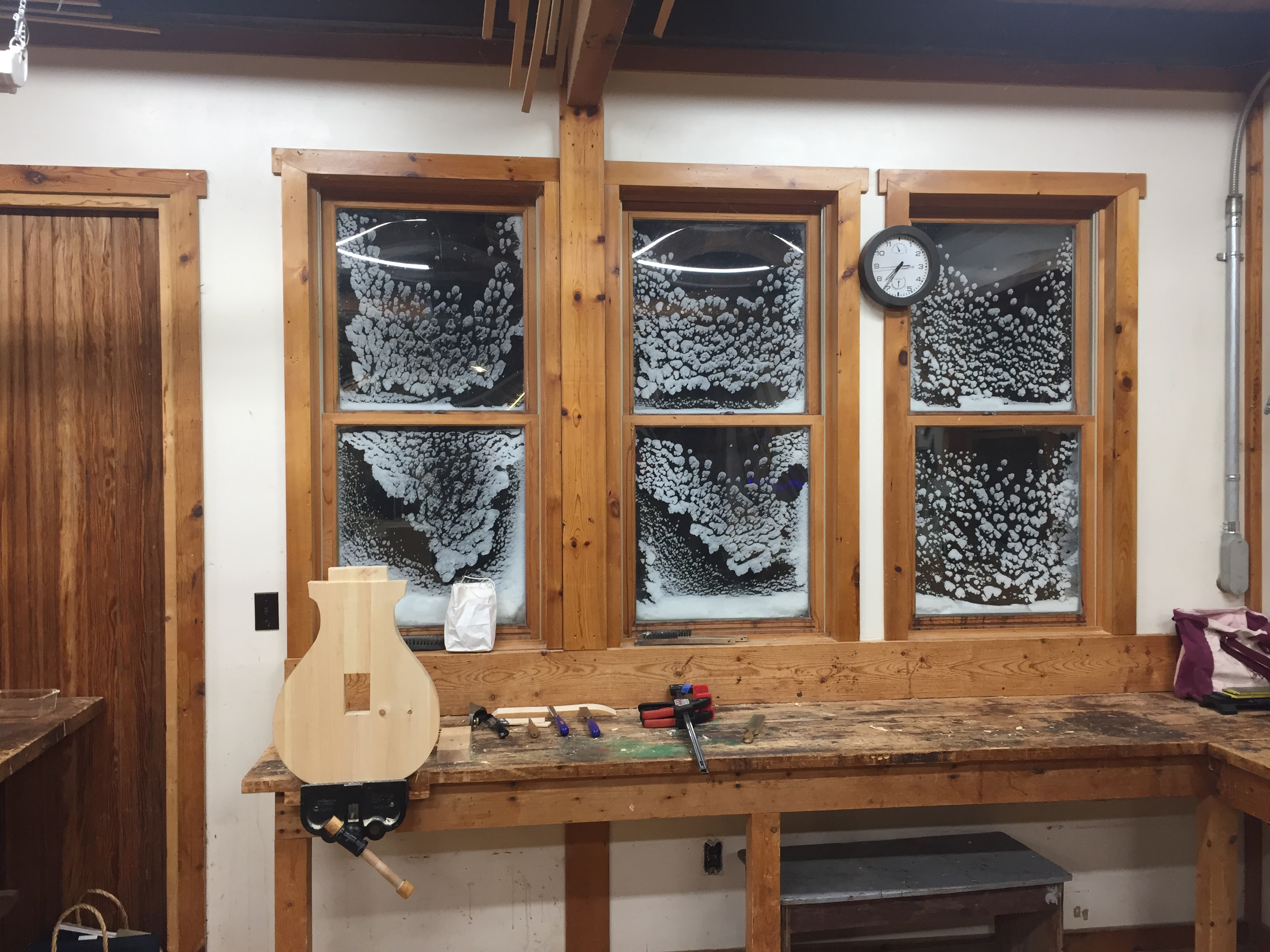
Most woodworking injuries happen in the first year. That is not because the tools are unusually dangerous — it is because beginners handle them without habits that experienced woodworkers follow automatically. This article covers those habits, along with the workshop setup details that make consistent safe work possible.
The Core Principle: Direction of Force
The single most important rule in hand tool work is to cut away from your body and supporting hand. Every chisel, hand saw, and carving tool generates force that must go somewhere when it slips. If that somewhere is a finger or forearm, the result is a trip to the emergency room. If it is into the workpiece or a bench, the result is a ruined cut and a lesson learned cheaply.
When paring with a chisel, clamp the workpiece or hold it against a bench stop so both hands are behind the cutting edge. When cross-cutting with a hand saw, keep the fingers of your guiding hand well behind the teeth and use your thumb only to establish the cut line at the beginning of the stroke.
According to the European Agency for Safety and Health at Work, lacerations and punctures from hand tools account for a significant share of non-fatal workshop injuries — most of which occur during the first stroke of a cut or when removing a stuck tool.
Hand Tools: The Four You Need First
Chisels
Keep chisels sharp. A dull chisel requires more force and skips unpredictably across the wood surface. Use a honing guide to maintain a consistent bevel angle — 25 degrees for general paring, 30 degrees for harder cuts. Before each session, run the back of the blade flat across a sharpening stone to remove the burr that develops with use.
Store chisels in a roll or with blade guards. Setting them loose in a drawer not only damages the edges but creates the risk of a hidden blade when you reach in.
Hand Saws
Use the right saw for the cut. A rip saw (fewer teeth per inch, more aggressive) cuts along the grain; a crosscut saw cuts across it. Pulling a crosscut saw through a rip cut (or vice versa) increases the force needed and reduces control. For beginners, a general-purpose panel saw with 8–10 TPI handles most situations while remaining predictable.
Start cuts on the pull stroke where possible. Japanese-style pull saws cut on the pull, which keeps the blade in tension and prevents it from buckling — a meaningful advantage when you are still learning to keep the blade vertical.
Hand Planes
Set the blade depth conservatively at first. Too deep a cut causes the plane to dig in, resulting in a choppy surface and a lot of physical effort. A shaving you can see through is about right for initial flattening; thinner still for final passes. Keep the sole waxed with paste wax — it reduces friction and leaves no residue on the wood surface.
Marking and Measuring Tools
A marking knife is not a knife in the kitchen sense. Keep it capped when not in use and always cut away from your body when scribing a line. Marking gauges with wheel cutters are safer than pin gauges for most operations because the wheel scores cleanly without splitting the grain ahead of the cut.
Power Tools: Setup Before Switching On
The critical difference between power tool safety and hand tool safety is speed. A hand saw that slips gives you a fraction of a second to react. A circular saw blade rotating at 5,000 RPM does not. Every power tool accident investigated by health and safety authorities in the EU points to the same root causes: missing or defeated guards, improper workpiece support, and distraction.
Circular Saw
Always use a rip fence or a clamped straight-edge guide for anything other than a freehand rough cut. Set the blade depth so it extends no more than 6–8 mm below the workpiece — less exposed blade means less exposure in the event of kickback. Never stand directly behind the blade. Kickback — where the blade catches the wood and throws it or the saw — travels along the line of the blade, not sideways.
Let the blade come to a complete stop before setting the saw down or moving the cut piece. A spinning blade set on a workbench can travel several centimetres before stopping.
Random Orbital Sander
Dust is the underestimated hazard of woodworking. Fine sawdust — particularly from MDF, plywood, and certain hardwoods — carries significant respiratory risk with prolonged exposure. Use a dust mask rated at least FFP2 (EN 149 standard, widely available in Poland), connect the sander to a vacuum or dust collector, and sand with the grain for the final passes to reduce scratching.
Drill / Driver
Secure the workpiece before drilling. A piece that spins with the bit — a common event when drilling through thin board without a backing board — can cause serious lacerations. Use a clamp or drill press when going through material fully. Countersinking holes before driving screws prevents splitting near edges, which is especially common in pine.
Workshop Layout and Storage
A safe workshop is primarily about control: controlling where tools are, where cut pieces land, and where you stand. Three layout details matter most for a beginner setting up a dedicated space — even a small garage corner.
- Clear floor around the bench. Off-cuts on the floor are a trip hazard and prevent you from repositioning your body cleanly during a cut.
- Adequate lighting. Working under a single ceiling bulb creates shadows across the workpiece surface. A directional lamp positioned low on the work reveals grain direction and surface irregularities that determine where and how to cut.
- Fire safety. Finishing rags soaked in linseed oil can self-ignite through oxidation. Spread used rags flat outdoors to dry, or submerge them in a metal container filled with water before disposal. This is not a theoretical risk — it causes real workshop fires.
Personal Protection
Safety glasses, not sunglasses — actual rated eye protection marked EN 166 or ANSI Z87.1. Chips from hand planes, splinters from splitting grain, and saw dust travel faster and further than most beginners expect. A single chip in the eye ends a workday; repeated unprotected exposure causes lasting damage.
Hearing protection is relevant for router and circular saw use at any significant duration. The EU Action Value threshold for hearing protection is 80 dB(A) — a circular saw at one metre reaches approximately 95–100 dB(A). Standard foam earplugs (SNR 30+) are adequate; earmuffs are more convenient for longer sessions.
The Polish State Labour Inspectorate (Państwowa Inspekcja Pracy) publishes guidance on woodworking workshop requirements for small and home workshops — worth reviewing before setting up a permanent space. See: pip.gov.pl
Before You Start Each Session
A five-minute check before picking up the first tool prevents the majority of foreseeable problems:
- Blade or edge sharp and correctly set
- Workpiece clamped or secured
- Clear path for the tool if it continues past the cut
- Eye and dust protection on
- No loose clothing or jewellery near moving parts
None of these steps take significant time once they become habitual. The time they save is the time not spent in an emergency room or replacing damaged work.